
Understanding Your Options for an Infected or Damaged Tooth
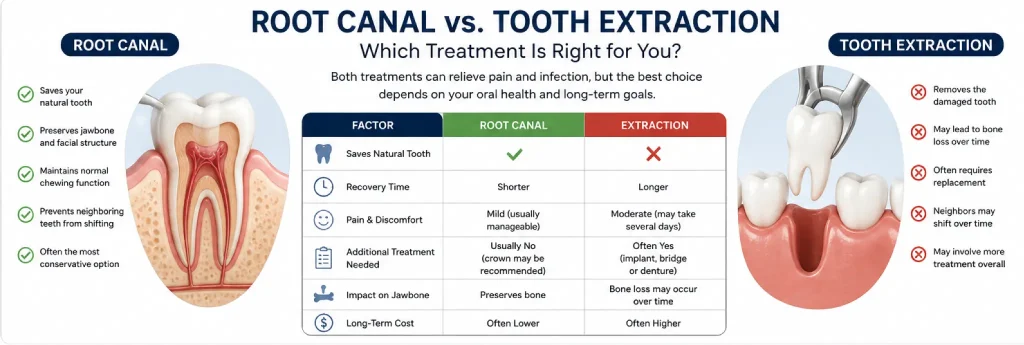
When a tooth becomes severely damaged, infected, or painful, one of the most common questions patients ask is whether they should save the tooth with a root canal or have it removed entirely. While both treatments can eliminate pain and infection, they serve very different purposes. In many cases, preserving your natural tooth with root canal therapy offers significant long-term benefits for your oral health, appearance, and function. However, there are situations where extraction may be the better option. At Lumen Dental, we help patients throughout Tysons Corner, Vienna, McLean, Falls Church, and surrounding communities understand their treatment options so they can make confident decisions about their dental health.
What Is a Root Canal?
Root canal therapy is a procedure used to remove infected or inflamed tissue from inside a tooth. The inner portion of the tooth, known as the pulp, contains nerves and blood vessels that can become damaged due to deep decay, cracks, trauma, or severe infection.
During treatment, the infected tissue is removed, the canals are cleaned and disinfected, and the tooth is sealed to help prevent future infection. In many cases, a dental crown is placed afterward to restore strength and function.
Root canal therapy allows patients to preserve their natural tooth while eliminating pain and infection.
What Is a Tooth Extraction?
A tooth extraction involves completely removing a tooth from the jawbone. Extractions may be recommended when a tooth is too damaged to repair, has extensive bone loss, is fractured below the gumline, or cannot be restored predictably.
Although extractions can eliminate infection and discomfort, removing a tooth often creates the need for additional restorative treatment to replace the missing tooth and maintain proper function.
Common replacement options include:
- Dental implants
- Dental bridges
- Partial dentures
When Is a Root Canal Better Than an Extraction?
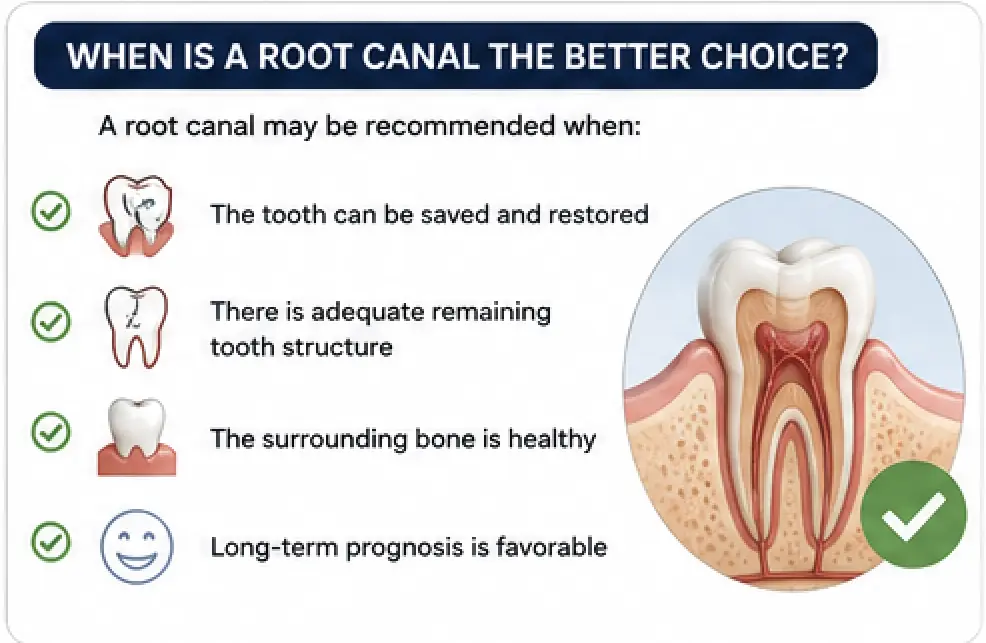
Whenever possible, preserving a healthy natural tooth is typically the preferred treatment option.
Root canal therapy may be recommended when:
- The tooth can be restored successfully with a crown.
- There is adequate remaining tooth structure
- The surrounding bone remains healthy
- Long-term prognosis is favorable
Benefits of saving your natural tooth include:
- Maintaining normal chewing function
- Preserving jawbone health
- Preventing neighboring teeth from shifting
- Avoiding more extensive treatment
- Maintaining your natural smile
For many patients, root canal therapy is the most conservative and cost-effective long-term solution.
When Is a Tooth Extraction Necessary?
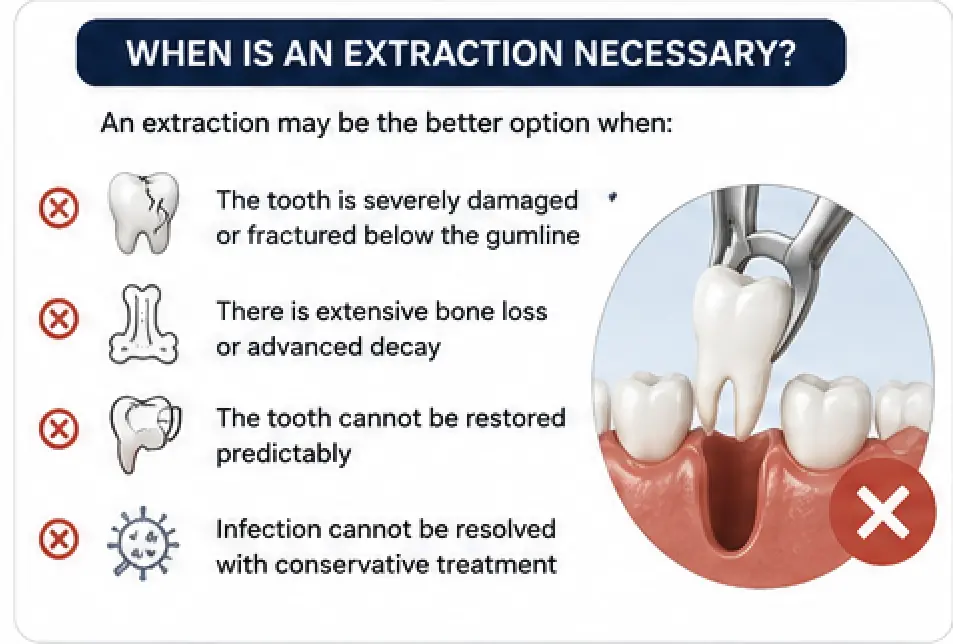
Although saving a tooth is often ideal, there are situations where extraction may be the better choice.
Examples include:
- Severe fractures below the gumline
- Extensive bone loss from periodontal disease
- Non-restorable decay
- Failed previous treatment with poor prognosis
- Advanced infection that compromises the tooth’s stability
Following extraction, Dr. Raoufinia can discuss options for replacing the missing tooth and restoring your smile.
Root Canal vs. Extraction: Cost Comparison
Many patients assume extraction is the less expensive option. While the initial procedure may cost less, it is important to consider the long-term costs associated with replacing a missing tooth.
A root canal often preserves the existing tooth and may eliminate the need for additional treatment.
After an extraction, many patients choose to replace the missing tooth with:
- A dental implant
- A bridge
- A removable partial denture
These treatments can increase overall treatment costs and require additional appointments. Both procedures are usually covered by insurance.
The best choice depends on your specific oral health needs, treatment goals, and long-term expectations.
Frequently Asked Questions About Root Canals and Extractions
Is a root canal more painful than an extraction?
- Modern root canal therapy is typically very comfortable. Many patients report that the procedure feels similar to receiving a dental filling.
Is it better to save a tooth or remove it?
- Whenever possible, preserving a healthy natural tooth is generally preferred because it maintains normal function and helps preserve jawbone health.
Can an infected tooth heal without a root canal?
- Once the pulp becomes infected, professional treatment is usually necessary. Antibiotics may temporarily reduce symptoms but often cannot eliminate the source of infection inside the tooth.
How long does a root canal last?
- With proper care and restoration, a tooth treated with a root canal can often last for many years or even decades.
What happens if I choose extraction instead of a root canal?
- After extraction, replacement options such as dental implants, bridges, or dentures may be recommended to restore function and prevent shifting of neighboring teeth.
Schedule Your Appointment Today
Lumen Dental is conveniently located in Tysons Corner and proudly serves patients from nearby communities, including Vienna, McLean, Falls Church, VA. Whether you’re visiting for preventive care, cosmetic dentistry, or urgent dental needs, our team is here to provide high-quality, personalized care in a modern and comfortable setting.
📞 Call Now: (703) 219-8575