

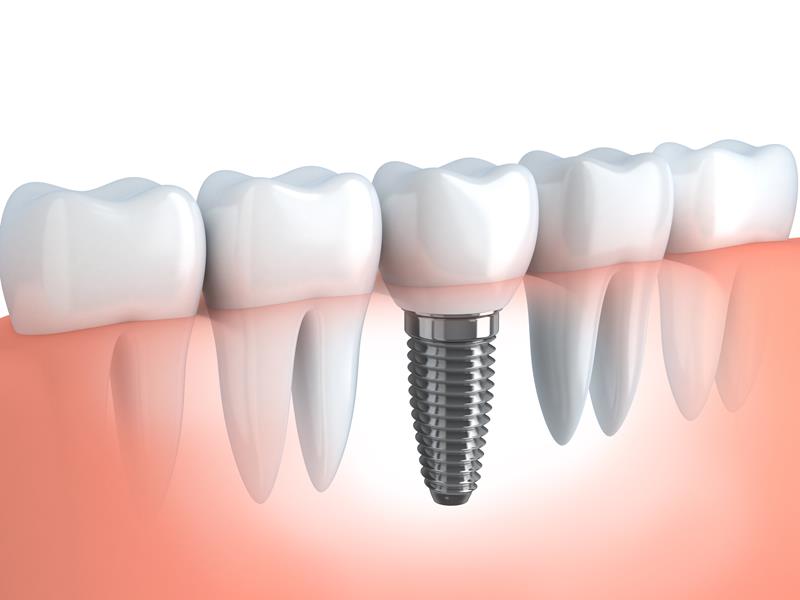
A dental implant is a small titanium post that functions like the root of a natural tooth. Once everything is healed, the implant serves as a strong foundation for a custom dental crown, effectively restoring the look, function, and feel of a natural tooth. Dental implants are often considered the most conservative and long-lasting solution for replacing a missing tooth because they do not rely on neighboring teeth for support.
Dental implants can be placed in either the upper or lower jaw, provided there is an adequate amount of healthy jawbone to support the implant.
How Dental Implants Work
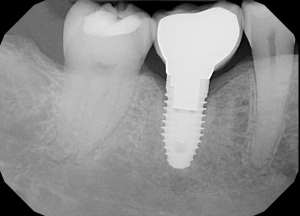 After placement, the implant gradually bonds with the surrounding jawbone through a natural process called osseointegration. This allows the implant to become a stable anchor for the replacement tooth. The healing and integration process typically takes three to six months. Once the implant has fully integrated and healing is complete, a custom dental crown is securely placed on top of the implant to restore your smile.
Bone Health and Implant Success
One of the most important factors in successful implant placement is having sufficient bone volume. After a tooth is extracted, the empty socket can collapse over time, leading to bone loss. To prevent this, socket preservation with bone grafting is often recommended at the time of extraction. Preserving the bone early can help maintain the proper structure needed for future implant placement. Once significant bone loss occurs, implant treatment may become more complex.
The Dental Implant Procedure
Traditionally, dental implant treatment is completed in two main appointments:
-
Implant Placement: During the first visit, the dentist places the implant into the jawbone. The implant is then allowed to heal and integrate with the bone over a period of three to six months.
-
Restoration: Once healing is complete, an abutment is attached to the implant, and impressions are taken to create a custom dental crown that will be placed on top of the implant.
The procedure is typically comfortable and well-tolerated, and most patients report minimal discomfort and a positive overall experience.
Caring for Your Dental Implant
Maintaining good oral hygiene at home and attending regular professional dental cleanings are essential for the long-term success of dental implants. Patients with untreated periodontal (gum) disease may not be ideal candidates for implants until their gum health is properly managed.
If you have any questions about dental implants and how we can help your smile, feel free to contact us today at (703) 219-8575.
Book Online